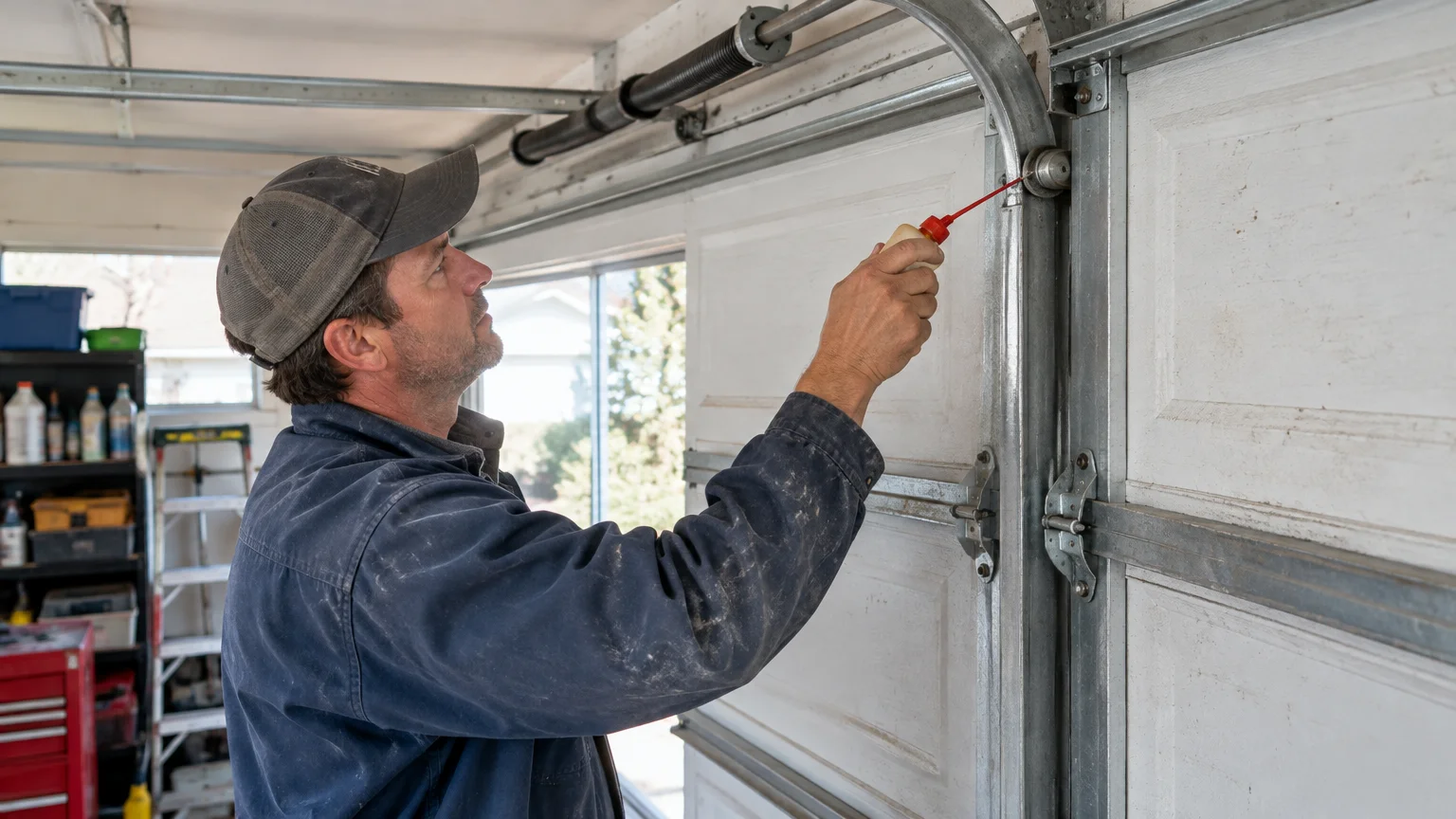
To learn how to oil garage doors safely, use a garage-door lubricant only on the moving parts named on its label. Keep your hands away from springs and cables, and do not oil the tracks. Wipe off extra lubricant, then watch the door move from a safe place. Stop if it acts or sounds worse.
Why does a garage door need lubrication?
Lubrication helps moving parts slide or turn with less rubbing. It can quiet small squeaks and help limit wear. But it cannot fix a broken part or a door that is out of balance. In Jamestown, regular checks can help you notice changes before the door stops working.
Which parts of the door should move quietly?
A garage door has hinges between its panels and rollers that move along the tracks. Springs help lift the door, while the opener moves it through a drive system. These parts should move without harsh scraping, banging, or repeated squealing. Some noise may remain, but sudden or growing noise needs attention.
A lubricant may work on hinges, metal rollers, or some springs, based on its label. Some rollers have sealed parts and should not be oiled. Tracks guide the rollers, but they usually should not be coated with oil. A slippery track can gather dirt or stop rollers from moving as they should.
What can cause a garage door to squeak or grind?
Dry hinges or rollers may squeak as the door moves. Dirt in the tracks, loose parts, worn rollers, or a door out of line can also cause noise. Grinding, scraping, or a loud bang may mean a part needs repair, not more lubricant.
Listen as the door moves, but do not stand under it or touch moving parts. If the sound comes from the opener, its drive or another part may be the cause. Garage Door Opener Repair may be needed if the opener strains, stops, or makes a new harsh sound. Lubrication helps with care, but it will not fix every noise.
What should you do before oiling a garage door?
Get the door and work area ready before you apply any product. Keep people, pets, and objects away from the door’s path. Read the lubricant label and the door or opener manual, as care advice can differ. Homeowners can clean and oil some parts, but should not repair loaded springs or cables.
How can you prepare the door and work area safely?
Close the door and make sure it cannot start moving while you work. Follow the owner’s manual when turning off the opener. Keep your fingers away from hinges, rollers, cables, and the spaces between door sections. Use a stable way to reach only parts you can access safely. Do not lean over the door or climb on it.
Wipe dust from the parts that need care with a clean cloth. Do not put your hands in the tracks, loosen hardware, or try to move a spring. Look for bent tracks, loose parts, frayed cables, or rollers that sit out of place. If anything looks damaged, stop and arrange a repair.
Which lubricant is suitable for garage door parts?
Choose a product made for garage doors or one named in the maker’s manual. Check the label to see which parts it suits. Some products work on metal parts, while others may not suit plastic or sealed rollers. Do not choose a product just because it is called oil; the wrong one may gather dirt or harm a part.
Do not use grease or a household spray on every part without checking its label. Keep lubricant off the tracks, door panels, and floor. Jamestown Garage Door Repair can help you tell if a noisy door needs care or repair. A tune-up may include checks for wear and door movement, not just adding lubricant.
How do you oil a garage door correctly?
For safe care, use only a small amount of suitable lubricant on moving parts named on the product label. Keep it away from tracks, cables, and the floor. Open and close the door only after applying the product as directed. Watch from a safe place, and stop if the door binds, jerks, or makes a harsh sound.
Where should you apply lubricant on the door?
Use the product only on parts its label allows, such as hinge points or metal roller bearings. If the manual says a spring may be oiled, follow its advice without touching or changing the spring. Do not spray into the opener or onto parts that are hard to reach.
Aim the spray at the part, not the area around it. A cloth can catch drips and wipe away extra lubricant. Do not remove covers or guards to reach a part. If you cannot reach it safely, leave the task to a trained technician.
How can you avoid over-lubricating or damaging components?
More lubricant does not mean better care. Too much can drip onto the floor, gather grit, or spread to parts that should stay clean. Follow the product directions and wipe away visible extra lubricant. Never apply it while the door is moving.
After the work, restore power to the opener if you turned it off. Follow the manual and stand clear while you test the door through a normal cycle. Do not hold or guide the door as it moves. If it shakes, catches, reverses for no clear reason, or sounds worse, stop using it and seek help.
When should you stop and call a garage door repair professional?
Stop and contact a professional if the door looks damaged, moves unevenly, or makes a loud bang or grinding sound. Never adjust torsion springs, extension springs, lift cables, or bottom brackets yourself. These parts can be under strong tension. A slip can cause serious injury or let the heavy door fall.
Which noises or movement problems may signal a repair issue?
A door that hangs crooked, leaves its track, drops fast, or will not stay open needs more than oil. Frayed cables, a gap in a spring, bent track, or loose parts are warning signs too. Keep clear, and do not try to lift, pull, or fix the door by hand.
A trained professional has the tools to check parts under tension and find the cause. Garage Door Off Track Repair or Garage Door Cable Repair may be needed if those parts are damaged. You do not need a professional for simple visual checks and safe upkeep, but hazardous repairs belong to a trained person.
How often should you inspect and lubricate the door?
Check the door from time to time and follow the care plan in its manual. Oil it only when needed and as the maker directs. Listen for new sounds, watch for rough movement, and look for wear. The right schedule depends on the door, its parts, and how often you use it.
Garage Door Maintenance can help when the door needs a broader check. A tune-up may find worn rollers, loose parts, or an opener issue that oil will not fix. Jamestown Garage Door Repair serves homeowners and property owners and nearby communities, including Buchanan, Spiritwood Lake, and Montpelier. In Jamestown, the main goal is safe, steady movement and a door that helps protect access to your home or business.
Frequently Asked Questions
Can a homeowner lubricate a garage door?
Yes. A homeowner can clean parts that are safe to reach and use a suitable garage-door lubricant when the manual allows it. Keep your hands away from moving parts, springs, and cables. Do not try to adjust or fix parts under tension. Stop if the door looks damaged or moves unevenly.
Should garage door tracks be oiled?
Usually, no. Tracks guide the rollers and should be kept clear of dirt and debris, not coated with oil. Lubricant can hold grit or affect how rollers move. Follow the maker’s instructions, and ask a repair professional if the rollers scrape or bind.
What is the best lubricant for garage doors?
The best choice is a product made for garage doors or named in the maker’s manual. Check its label to see which parts it suits. A product that works for one kind of roller may not suit another. Use a small amount and keep it off tracks and panels.
Why is the door still noisy after lubrication?
Noise can come from worn rollers, loose parts, poor alignment, or an opener problem. Lubrication will not fix a damaged or failing part. If noise remains, gets louder, or comes with jerky movement, stop using the door and arrange an inspection.
Key takeaways
- Use a garage-door product and follow its label and the door manual.
- Oil only the moving parts the product allows; keep tracks clean and dry.
- Homeowners can do simple upkeep, but should not repair springs or cables.
- Stop if the door is crooked, jerky, damaged, or suddenly loud.
Conclusion
Correct lubrication can quiet some garage door sounds and help with routine care, but it cannot fix damage. Keep the task simple, use a suitable product, and leave springs, cables, and other risky parts alone. If your door is noisy or unsafe, Contact us to arrange help from Jamestown Garage Door Repair.
If you are not sure what you are dealing with, it is worth having someone look at it before it turns into a bigger job. Get in touch with Jamestown Garage Door Repair today and we will tell you where you stand.