Garage doors won’t close when sensors, obstructions, travel limits, force settings, or opener parts stop safe movement. Start with simple checks near the sensors and door opening. Do not adjust springs, cables, or force settings without training. A damaged or stuck door may need prompt garage door repair to protect people and property.
A door that stops can leave a home, shop, or rental property open. This can feel stressful, especially when a car is inside or the building will not lock. Many causes are easy to spot without taking risks.
Jamestown Garage Door Repair helps property owners understand what a stuck door may need. The right fix depends on the door symptoms, opener response, and condition of the moving parts. Property owners in Jamestown can use these checks to decide what to do next.
Table of Contents
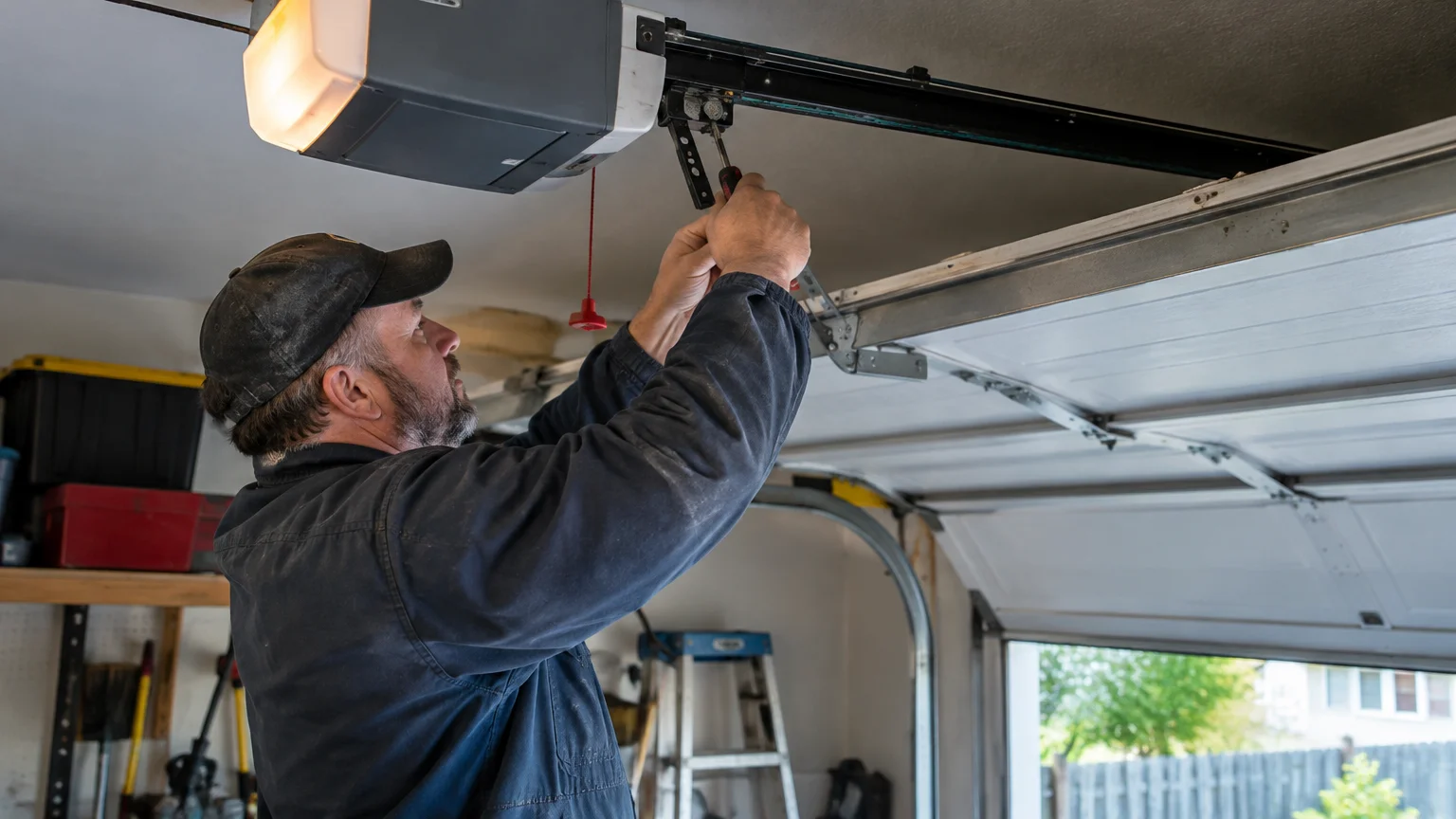
- Why will a garage door not close all the way?
- Could the safety sensors be stopping the garage door?
- What other obstructions can keep a garage door from closing?
- How do travel limits affect a garage door that will not close?
- Can the opener force setting cause the door to stop or reverse?
- Why will a garage door open but not close?
- What should you do when garage doors will not close?
Why will a garage door not close all the way?
A garage door may stop because it sees an unsafe path, meets resistance, or loses its travel setting. Common signs include reversing after touching the floor, stopping above the floor, moving only a short distance, or making a loud sound without moving.
These signs can help narrow the cause. A door that closes partway and reverses often has sensor trouble or resistance. A door that stops at the same place may have a travel limit issue. A door that hangs, tilts, or feels uneven may have a track, roller, hinge, cable, or spring problem.
Common symptoms and what they indicate
Watch the pattern before testing again. A blinking opener light may point to a safety sensor issue. A grinding sound may suggest worn parts. A loose cable or crooked door needs more care than a dirty sensor. If the door opens by hand but not with the opener, the opener controls or safety circuit may be involved.
A door that is heavy, uneven, or partly open should not be forced. Garage door springs and lift cables hold strong tension. If they fail, parts can move fast and cause serious injury. A trained technician has the tools and skill to check these parts safely.
When to stop testing the door
Stop using the opener if the door slams, hangs to one side, falls, shakes, or makes sharp metal sounds. Stop when a cable has come loose, a spring looks broken, or a panel is bent into the track. Repeated testing can turn a small fault into more damage.
Keep people and vehicles away from the opening. Jamestown Garage Door Repair can help Jamestown homeowners, business owners, and property managers decide whether the issue needs urgent garage door repair or a planned visit.
Could the safety sensors be stopping the garage door?
Yes. Safety sensors can stop a garage door from closing when their beam is blocked, dirty, or out of line. These small devices sit near the bottom of the tracks. They send an unseen beam across the opening. If the beam does not reach the other sensor, the opener may reverse the door.
How sensor alignment and obstructions affect closing
Check the area around both sensors first. Remove leaves, boxes, tools, or other items that may block the beam. Wipe each lens with a soft, dry cloth. Do not spray cleaner into the sensor or bend its bracket.
The sensors should face each other across the opening. A bump from a car, broom, pet, or moving box can change their aim. Loose brackets, damaged wires, or a sensor that has shifted can also break the signal. Sensor alignment is safe to inspect, but damaged wiring or mounts may need a technician.
What sensor lights and reversing can reveal
Many systems use small lights to show sensor status. One light may blink or turn off when the beam is blocked or the sensors are out of line. The light pattern varies by opener maker, so the owner’s manual is the best guide.
If the door closes while the wall button is held down, the safety sensor circuit may be involved. This is not a repair or a safe way to bypass the sensors. Never leave the door running with disabled sensors. They help lower the risk of the door closing on a person, pet, or object.
If cleaning and clearing the area do not help, arrange sensor cleaning, alignment, or repair. A professional can inspect the full safety circuit without removing protective parts.
What other obstructions can keep a garage door from closing?
Anything that adds resistance or blocks the path can stop a garage door. The problem may be on the floor, in the tracks, between panels, or inside the opener. A careful visual check can find many safe-to-handle problems.
Checking the opening, floor, and door panels safely
Look across the floor for stones, toys, tools, ice, or stored items. Check the bottom seal for folds or gaps that may catch on the floor. A garage door seal helps close the gap at the bottom, but a damaged seal can also catch. Look at each panel for dents, cracks, or a section that sits out of line.
Do not pull on a damaged door or push it back into place. Weather can also change the floor or seal. In Jamestown, dust, wind, snow, and storms may leave dirt near the opening. Cleaning can help keep the path clear, but it will not fix a bent panel or failing balance system.
How damaged rollers, hinges, and tracks affect travel
Rollers help the door move inside the tracks. Hinges connect the door sections and let them bend during travel. Tracks guide the rollers. If one part is bent, loose, cracked, or worn, the door may bind and reverse.
A homeowner can look for loose hardware, but tightening or replacing parts may be unsafe when the door is under tension. Never straighten a track by force or remove a roller from a loaded door. A technician can check whether the issue calls for Garage Door Off Track Repair, Garage Door Cable Repair, or another service.
Do not add oil to every part without checking the maker’s guide. The wrong product can collect dirt or harm some materials. Simple cleaning is often safe, but repairs near springs, cables, bottom brackets, or heavy panels should be left to a trained professional.
How do travel limits affect a garage door that will not close?
Travel limits tell the opener where the door should stop at the top and bottom. If the close setting is wrong, the door may stop above the floor, press too hard, or reverse before closing. A change can happen after an opener replacement, impact, worn parts, or an electrical fault.
What the close-travel setting controls
The close-travel setting controls how far the opener moves the door toward the floor. It works with the door balance, sensors, force response, and moving parts. It does not fix a blocked track, broken spring, damaged cable, or bent panel.
A door that stops at the same point may have a limit concern. Yet the same sign can come from a door that cannot move smoothly. That is why changing a setting before checking the door can hide the real problem.
Signs the limit setting needs professional adjustment
A technician should inspect the system when the door closes too far, leaves a gap, reverses near the floor, or stops after an impact. The same is true when the opener works only after repeated resets. The right adjustment depends on the opener model and door condition.
Owners should not guess at settings or test a door that is heavy or uneven. Travel controls can affect garage door safety. A professional can review the manual, inspect the balance, and check that the opener is not working against a mechanical fault.
If an opener is old, noisy, or unreliable, Garage Door Opener Repair may fit better than repeated adjustments. The service plan depends on the cause found during the inspection.
Can the opener force setting cause the door to stop or reverse?
Yes. The force setting affects how much resistance the opener accepts while moving the door. If the system senses unusual resistance, it may stop or reverse. This safety response can point to a real door problem, not only a setting problem.
How force limits respond to resistance
Resistance may come from a tight track, worn roller, damaged hinge, bent panel, or poor balance. Cold weather, dirt, and a damaged bottom seal can also change how the door moves. The opener may react before the owner sees the exact cause.
A well-balanced door should move smoothly when checked by a trained person. A heavy or falling door is not safe to test. Springs carry much of the door’s weight, and garage door spring work needs special tools and training.
Why increasing force is not always safe
Increasing force can make the opener push harder against an object or damaged part. That can raise the risk of damage or injury. It can also hide a worn spring, bad roller, bent track, or other fault until the problem grows.
Homeowners should not change force settings just to make a stuck door move. They can clear safe obstructions and check sensor lenses, but they should stop when the door binds or looks uneven. A trained technician can inspect the opener and door together, then make needed changes safely.
This matters for businesses and rental properties. A door that will not close can affect access, security, and daily work. Prompt help may reduce the chance of a larger failure.
Why will a garage door open but not close?
A garage door that opens but will not close often has a sensor, control, wiring, or closing-travel problem. The opener can receive the command to open while refusing the command to close. This protects people and property when the safety circuit does not report a clear path.
Opener controls, wall buttons, remotes, and wiring
Try the wall button and remote separately. If one works and the other does not, the issue may involve the remote battery, remote programming, wall control, or wiring. If neither control closes the door, the sensors, opener logic, power, or door mechanics may be involved.
Check that the opener has power and that its light or display shows normal operation. Avoid opening the opener housing or touching wiring. Incorrect changes may disable safety features.
A remote that works only from very close range may need attention, but it does not explain every closing problem. The door path and sensors still need a check. Repair Garage Door Openers is a suitable service when controls, wiring, or the opener motor are failing.
When a failing opener or damaged door is likely
The opener may be failing when it hums, clicks, overheats, loses power, or works only sometimes. The door itself may be the main issue when it is crooked, heavy, loud, or hard to move. Both parts should be checked before anyone recommends replacement.
People searching for garage door opening repair or garage door open repair may be dealing with a door that moves only one way. A local technician can sort out whether the problem is the opener, door, or both. Jamestown Garage Door Repair serves the main Jamestown area, including Buchanan, Spiritwood Lake, Montpelier, and nearby communities.
What should you do when garage doors will not close?
When garage doors will not close, clear safe objects, inspect the sensor area, and stop testing if the door looks damaged or unsafe. Keep children, pets, vehicles, and stored items away from the opening. Use a temporary barrier only if it does not touch or support the door.
Safe steps to secure the property temporarily
Homeowners can safely take these simple actions:
- Keep people and vehicles away from the door path.
- Remove loose items that clearly block sensors or the floor.
- Clean sensor lenses gently with a dry, soft cloth.
- Close and lock a nearby service door when available.
- Avoid forcing, lifting, or holding a damaged door.
Do not disconnect safety sensors, pull emergency releases on a moving door, or adjust springs and cables. Torsion springs, extension springs, lift cables, and bottom brackets can release stored force. These parts need a trained professional with the right tools and safe methods.
When to arrange same-day garage door repair
Arrange prompt service when the door is stuck open, the building cannot be secured, a cable has come loose, or the door is off track. Same-day help may also matter when a car is trapped inside or a business cannot use its main entrance. The need depends on the safety and access risk.
Key takeaways
- Sensors, obstructions, travel limits, and force settings can stop closing.
- Cleaning sensor lenses is usually safe, but bypassing sensors is not.
- Bent tracks, loose cables, springs, and heavy doors need professional care.
- Increasing opener force can hide a serious mechanical problem.
- A technician should inspect repeated reversing, binding, or uneven movement.
Jamestown Garage Door Repair can help property owners find the next safe step when a door will not close. Contact us today to arrange urgent garage door repair and restore secure access.
Frequently Asked Questions
Why does my garage door close halfway and then open again?
A door that closes halfway and reverses may have blocked or misaligned safety sensors. It may also meet resistance from a damaged track, roller, hinge, seal, or panel. Clear safe objects and clean the sensor lenses. Stop testing if the door binds, hangs unevenly, or makes harsh sounds.
Can I clean garage door safety sensors myself?
Yes, most homeowners can gently wipe sensor lenses with a soft, dry cloth. They can also remove objects that block the beam. Do not bend brackets, cut wires, or bypass sensors. If the lights remain abnormal or the door still reverses, professional inspection is safer.
Why does my garage door open but not close with the remote?
The problem may involve the sensors, remote, wall control, wiring, opener, or closing limit. Test the wall button and remote separately, then check that the opener has power. Do not open the motor housing or change force settings without guidance. Repeated failure needs garage door opener repair.
Is it safe to force a garage door closed?
No. Forcing a door can worsen a bent track, damaged panel, broken spring, or loose cable. It may also cause the door to fall or move suddenly. Keep the area clear and arrange professional help when the door is heavy, crooked, noisy, or stuck above the floor.
Who services garage doors near me when the door will not close?
A local garage door repair company can inspect sensors, tracks, rollers, cables, springs, travel limits, and the opener. Choose a service that handles the fault involved and can respond to the safety risk. Jamestown Garage Door Repair serves Jamestown and can help assess the next step.
If you are unsure what is wrong, have the door checked before the problem grows. The right inspection can help protect people, property, and the opener from further harm.
If you are not sure what you are dealing with, it is worth having someone look at it before it turns into a bigger job. Get in touch with Jamestown Garage Door Repair today and we will tell you where you stand.