Garage Door Off Track Repair in Jamestown, ND
A door that has left its track is braced, guided back in, and re-hung on straight track with healthy rollers, and the cause of the derailment is corrected so it stays put.
When rollers on your Jamestown garage door have popped free, the door tilts or binds, or a panel is bowed where it snagged, it's off track. Stop using the door, and keep the opener switched off until it's been looked at.
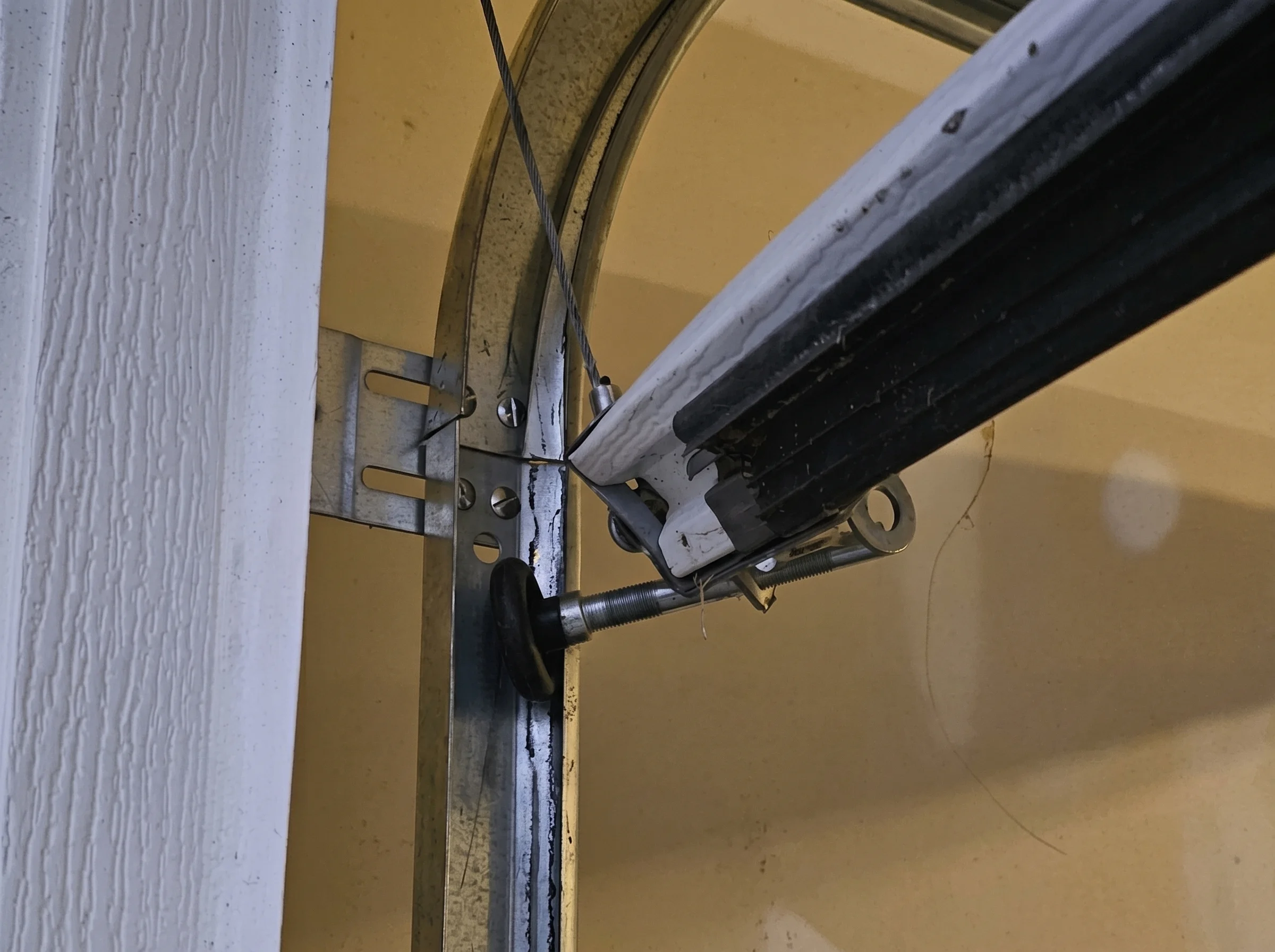
Signs a door is off track
A roller or several sitting outside the track, typically low on the door or at the bend where the track curves up toward the ceiling.
The door slanted or jammed, often halfway open.
A panel bowed or creased from the opener pushing against a stuck door.
Track that is visibly bent, dented or pulled off the wall.
Scraping, popping or grinding noises as it moved, right before it jumped out.
Door off its track? Leave the opener alone and tell us which side slipped and what happened.
Contact UsWhat knocks a door off track
Hit by a vehicle
Reversing into a closed or partly open door is the leading cause, and it commonly kinks the lower end of the track too.
A slipped or broken cable
One side drops, the door twists and the rollers escape. If a cable has gone slack, the cable repair page deals with that part.
Rollers worn through
A roller whose bearing has failed scrapes instead of rolling, then hops out at the first rough spot.
Track out of true
Over years of vibration the brackets holding the track to the wall loosen, letting the rails spread until a roller escapes.
Something in the way
A mower, a bicycle or packed ice at the threshold; Jamestown averages about 46 inches of snow a year, per NOAA.
First steps
Leave the opener off
Left running, it keeps pushing and can crease panels or pull track off the wall.
Don't use the emergency release while the door is partly raised and off its track entirely, because it may fall or swing loose.
Don't pound the rollers back in while the door bears weight. Even derailed, it still holds spring tension and can lurch without warning.
Stay clear of the door, and mention it when you get in touch if a vehicle is shut inside.
How the repair goes
The door is braced so it can't drop or move during the work, and spring tension is handled where it applies.
Damage is surveyed
Which rollers are affected, how much track, whether panels bent, and whether a cable or spring set it off.
Track is trued or swapped
Slight bends can be straightened; creased or torn track is replaced.
Rollers are swapped where worn or cracked, with hinges inspected, because a split hinge will throw a roller again.
The door is hung back in the track and the brackets tightened, then the opener's force, travel and auto-reverse (a Consumer Product Safety Commission requirement) are rechecked.
Describe the situation
A line or two is enough to begin; the name of the broken part is not something you need to know.
Rollers
Rollers largely decide how smoothly and quietly a door runs, and they tire out well before the door itself.
Plain steel rollers without bearings are the entry level. They clatter and grind down the track as well as themselves.
Nylon rollers with sealed bearings run far more quietly and need little or no oiling.
Wobble, flat spots, cracked wheels or stuck bearings show a roller has reached its limit.
If the door is merely noisy rather than damaged, new rollers may be most of the cure, and they're often done during a maintenance visit.
What affects the price of off-track repair
Extent of the derailment
A pair of rollers at one corner, or a door dangling free.
Track condition
Straightening or replacing track sections, on one side or both.
Rollers and hinges due for replacement.
Bowed or creased panels
A badly bowed panel may need replacing, which could mean finding a match for an older door's style.
The cable or spring failure that caused it.
When a panel is beyond saving
A hard impact can leave panels too crushed to straighten. One panel can often be replaced while the rest of the door stays, provided a matching one is still manufactured by the maker.
If not, or if several panels are hurt, garage door installation lays out the replacement choices in detail.
Frequent questions
Is it safe to pop a roller back in myself?
Possibly, if a single roller slipped out at the bottom of a closed door and no track is bent and no cable is loose. Beyond that, stop: the door is heavy, spring-loaded and can shift without any warning at all.
Why does the same side keep jumping out?
Most often a slightly bent track, a slack bracket, or an out-of-adjustment cable on that side. Hanging the door back without curing that cause means it will jump out again before long.
Do the tracks need oil?
No. Leave them clean and dry, since oil gathers grit. Roller bearings, hinges and springs are the parts meant to be oiled.
Other garage door work
Garage Door Cable Repair
Worn, parted or slipped lift cables, and a door that sits crooked.
Read more →Garage Door Spring Repair
Replacement torsion or extension springs, chosen to carry that particular door's weight.
Read more →Garage Door Installation
A fresh door cut to your opening, with steel, wood, composite or glass panels, and more.
Read more →Contact us
Say where the door is stuck, which side slipped, what hit it and whether a cable looks loose.
Send a photo of each side from a few feet back, and get the repair scope in writing, as the North Dakota Attorney General advises.