The safest answer to how to repair garage door springs is not to do the repair yourself. A garage door spring holds strong stored energy and can cause serious harm if it slips or breaks. Homeowners can inspect the area and keep tracks clean, but a trained technician should handle springs, cables, and bottom brackets.
Table of Contents
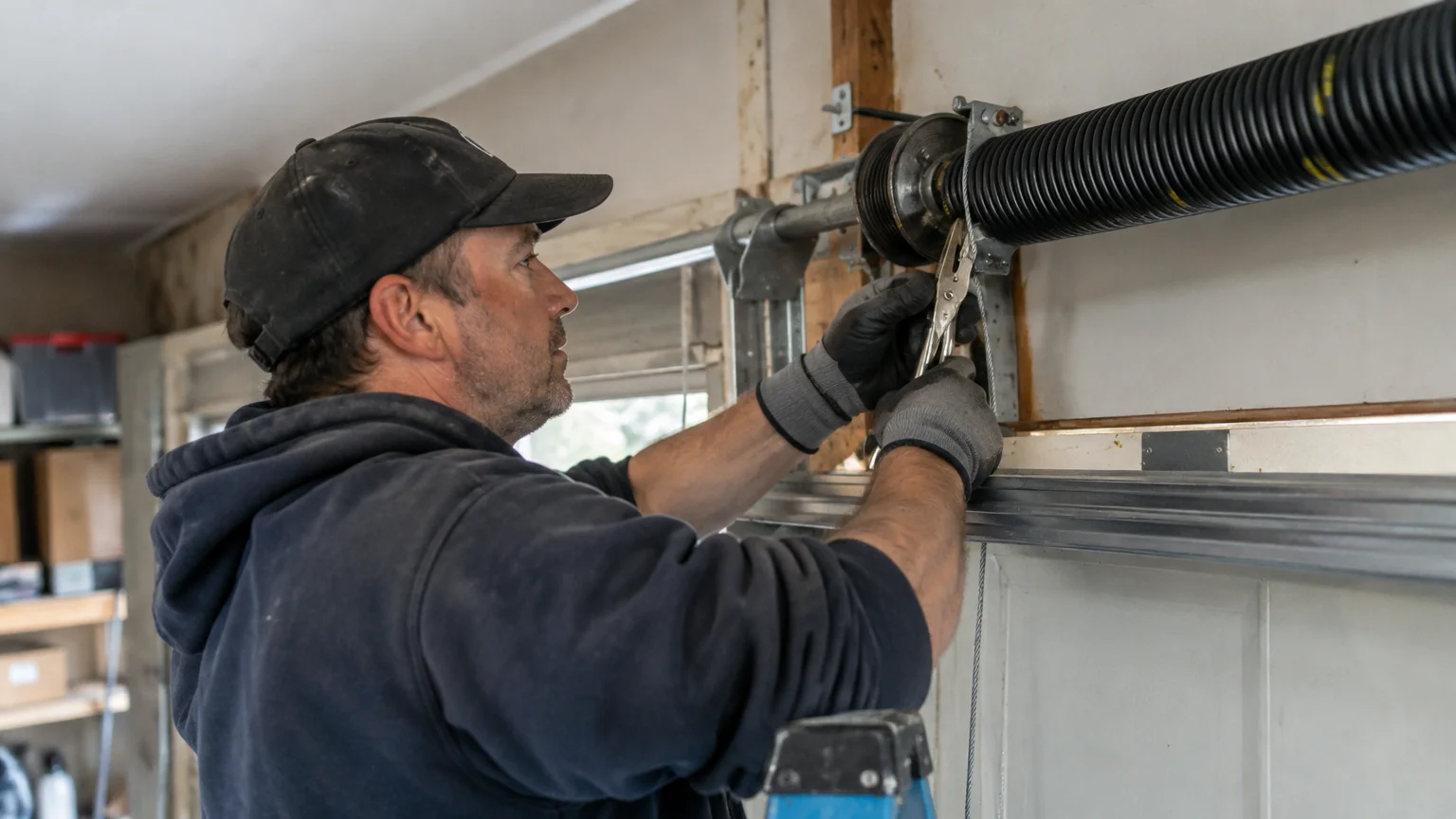
- Why is garage door spring repair dangerous for homeowners?
- What do garage door springs actually do?
- What can go wrong when you try to repair garage door springs?
- How can you tell when a garage door spring needs professional attention?
- Why should lift cables be inspected during spring repair?
- What does a professional garage door spring repair involve?
- What should you do when a garage door spring breaks?
Why is garage door spring repair dangerous for homeowners?
Garage door spring repair is dangerous because the spring helps carry the door’s weight. The spring stays under high tension during normal use. If it, a tool, a cable, or a bracket fails, parts may move with great force. For this reason, a trained garage door technician should handle the repair.
How stored spring tension creates serious injury risks
Stored tension is energy held inside a spring while it is stretched or twisted. Torsion springs sit above the door and twist as the door moves. Extension springs usually run beside the upper tracks and stretch during use. Both types can release energy very quickly when handled the wrong way.
A damaged spring may snap, shift, or pull nearby parts. A tool may slip from the spring. A bracket may break loose from the wall. Hands, fingers, eyes, and the head can all be hurt. The risk remains even when the door looks still.
Homeowners should never loosen, cut, stretch, wind, or replace a garage door spring. They should also avoid touching a tight lift cable or one wrapped around a drum. These parts may still hold force.
Why a closed garage door can still be hazardous
A closed door may hide a broken spring, loose cable, or bent support. The door may also move if someone uses the opener. When the spring cannot carry the weight, the opener may strain or fail. The door may fall, lift unevenly, or stay stuck.
Keep children, pets, vehicles, and stored items away from the door. Do not stand below a door that looks crooked or partly open. Jamestown Garage Door Repair helps Jamestown property owners understand when a safe inspection is needed without asking them to do risky work.
What do garage door springs actually do?
Garage door springs help balance the door’s weight. This lets the opener guide the door instead of lifting all the weight by itself. When springs weaken or break, the door may become heavy, loud, uneven, or unsafe to move.
Torsion springs and extension springs
Torsion springs mount on a shaft above the door. They twist as the door opens and closes. Extension springs sit beside the horizontal tracks and stretch as the door opens. Each system needs different parts, tools, supports, and safety checks.
Spring type is only one part of the repair. Door weight, height, track layout, drum size, and cable setup also matter. A replacement that looks similar may still be wrong. The new part must match the whole door system.
How springs balance the door’s weight
A balanced door should move smoothly and stay supported through much of its travel. The spring system shares the load with cables, drums, rollers, tracks, and the opener. If one part fails, other parts may take stress they were not built to carry.
This is why replacing only the visible broken part may miss a larger issue. A technician checks the spring system and the door as a whole. In Jamestown, weather, dust, building age, and daily use can also affect metal parts.
Homeowners can safely keep tracks clear and watch for changes. They can also clean visible dirt from safe areas. They should not test the balance by lifting a heavy door or disconnecting the opener unless a technician has made the area safe.
What can go wrong when you try to repair garage door springs?
DIY spring work can turn a small failure into a larger repair. Common risks include using the wrong spring, supporting the door poorly, using unsafe tools, or disturbing a part that still holds tension. A mistake can affect the door, opener, cables, tracks, or wall supports.
Common mistakes with tools, supports, and replacement parts
Garage door spring work needs tools made for the system. Improvised bars, ladders, clamps, or household tools may slip or break. A jack or support placed in the wrong spot may bend a panel or damage the track.
Replacement parts also need careful matching. Spring length alone does not identify the right part. Wire size, inside diameter, winding direction, door weight, and system design may all matter. Guessing can leave the door unsafe or place extra strain on the opener.
A homeowner should not follow a spring replacement sequence from a video or guide. Learning why the repair is dangerous is helpful. Instructions for winding or removing a spring are not safe for an untrained person.
How damage can spread to cables, tracks, and openers
A broken spring can let the door shift. That movement may pull a lift cable from its drum or bend a track. A cable that jumps off the drum may bunch, fray, or catch. The opener may then run against a door that is too heavy or out of line.
Continued use can make the problem worse. It may also leave a door above a vehicle or block a business entrance. Garage Door Off Track Repair, Garage Door Cable Repair, or Garage Door Opener Repair may be needed along with spring service.
How can you tell when a garage door spring needs professional attention?
A spring needs professional attention when the door becomes heavy, uneven, noisy, or stuck. A visible gap in a torsion spring, a loose extension spring, or a hanging cable is a strong warning. Do not force or operate the door until the system is checked.
Visible signs of a broken or weakened spring
Common signs include a door that will not open, an opener that hums, or a door that rises only a short way. A spring may show a clear break, rust, stretching, or odd movement. Extension spring safety cables may also look loose or out of place.
Other warnings include a gap in the coil, a door that slams down, or panels that sit unevenly. A garage door spring broken on one side can make the whole door tilt. The visible sign may not show the full cause.
Homeowners may look from a safe distance with the door closed. Do not touch the spring, cable, drum, bracket, or track. A flashlight can help you see the parts, but it should not lead to hands-on testing.
Why unusual sounds and uneven movement matter
Popping, snapping, scraping, and grinding sounds may show movement in a loaded part. Jerking or shaking can point to a cable, roller, track, spring, or opener issue. Treat these signs as safety warnings, not small annoyances.
A door that works sometimes can still be unsafe. Uneven movement may mean a cable is slipping or a spring is losing support. Jamestown Garage Door Repair can help Jamestown property owners decide whether Garage Door Spring Repair or a wider inspection fits the problem.
Why should lift cables be inspected during spring repair?
Lift cables connect the spring system to the door. They transfer the spring’s force through drums and brackets. If a cable is frayed, loose, off the drum, or twisted, the door may not move safely even after the spring problem is found.
How lift cables work with the spring system
As the door moves, lift cables travel around drums near the top corners. The cables must stay lined up and carry force evenly. Their condition depends on the springs, drum position, bottom brackets, door alignment, and track movement.
That is why a garage door cable fix is not just a matter of pulling a loose cable back into place. The cause must be found first. A cable may have moved because of a broken spring, damaged bracket, bent track, or door that shifted out of level.
What frayed, loose, or off-drum cables can indicate
Frayed strands may show rubbing, age, poor alignment, or extra stress. A loose cable may point to a broken spring or a door that lacks proper support. An off-drum cable can create a sudden hazard when the door moves.
Do not straighten, reconnect, or tighten the cable yourself. Lift cables and bottom brackets may hold dangerous force. The safest choice is to stop using the door and keep people away until the system is checked.
For homes and businesses across the main Jamestown area, service may also reach Buchanan, Spiritwood Lake, Montpelier, and nearby communities. A combined spring and cable check can help find the cause of a repeat failure. The right repair depends on why the cable moved, not only on what is easiest to see.
What does a professional garage door spring repair involve?
A professional repair starts with a safety check and a full view of the door system. The technician looks at the spring, shaft, drums, cables, brackets, tracks, rollers, panels, and opener. The goal is to find the failed part and any damage caused by it.
How technicians assess the door and identify the correct parts
The technician checks the door design, spring type, mounting points, cable path, and signs of wear. They also look for loose fasteners, bent tracks, damaged panels, and poor alignment. These checks help prevent a new part from being placed in an unsafe system.
The work area must stay clear. People and vehicles should remain outside the door’s movement zone. The technician uses proper tools and safe methods for that spring system. This is much safer than trying to learn how to replace garage door springs through trial and error.
The final repair cost is confirmed on a quote after the needed work is understood. It can depend on the parts, door size, access, damage, and urgency. Spring repair is often a smaller job than replacing a door, while cable or structural damage may make the repair broader.
Why testing balance and operation is essential after repair
Repair is not complete when a new spring is in place. The technician checks that the door sits correctly, moves smoothly, and works with the opener. Cables should track properly, and the door should not bind, slam, or rise unevenly.
Safety devices and opener operation also need attention. A door that moves well by hand may still have an opener or sensor issue. Proper testing helps protect people, vehicles, and the building from another failure.
What should you do when a garage door spring breaks?
When a spring breaks, stop using the door and keep everyone clear. Do not pull the emergency release, lift the door by force, or touch the spring and cables. Protect the area first, then arrange garage door repair from a qualified professional.
Safe steps to protect people, vehicles, and property
The safest response is simple:
- Keep children, pets, workers, and visitors away from the door.
- Leave vehicles outside the opening if the door may move.
- Do not use the opener after a spring or cable failure.
- Do not touch loose cables, brackets, drums, or spring coils.
- Tell the technician about unusual sounds, movement, or visible damage.
If the door is partly open, do not try to close it alone. A heavy door can fall without warning. If it blocks a vehicle or entrance, explain the access problem when requesting service.
When same-day or emergency garage door repair is appropriate
Same-day or emergency help may suit a door that cannot secure a home, blocks a business entrance, traps a vehicle, or has a loose cable or falling panel. A door that is closed but damaged may still need quick attention if someone could operate it.
Garage Door Installation is a separate service when the door has major structural damage or replacement makes more sense. For a repairable failure, Garage Door Spring Repair can address the spring system while related cable, track, or opener concerns are checked.
Key takeaways
- Spring work is hazardous because springs store strong energy.
- Homeowners can inspect and clean, but they should not adjust springs or cables.
- A broken spring can affect cables, tracks, panels, and openers.
- A technician must match parts and test the full door system.
- Stop using a damaged door until the system has been checked.
Frequently Asked Questions
Can a homeowner safely repair a garage door spring?
No. A homeowner can keep the area clear, inspect from a distance, and report symptoms. Spring, cable, bottom-bracket, and tension work should be handled by a trained technician. Stored energy can cause serious injury if a tool slips or a part releases suddenly.
How do you know if a garage door spring is broken?
A broken spring may show a gap in the coil, a door that feels very heavy, or an opener that cannot lift the door. Loud snapping sounds, uneven movement, and loose cables are also warnings. View the spring without touching it or operating the door.
Can a garage door opener work with a broken spring?
It may run, but using it can damage the opener or worsen the door problem. The opener is not made to replace the spring’s support. If the door is heavy, crooked, or stuck, stop using the opener and arrange a professional inspection.
Should lift cables be replaced with garage door springs?
Not always, but cables should be checked whenever spring work is needed. A broken spring can pull a cable out of line or damage it. Frayed, loose, or off-drum cables need proper attention before the door is used again.
Who repairs garage doors near me?
A local garage door repair company can assess springs, cables, tracks, and openers. Jamestown Garage Door Repair serves Jamestown and nearby areas. Choose a provider that treats spring and cable work as hazardous and explains the repair before work begins.
Conclusion
How to repair garage door springs is best understood as a safety question, not a home project. Homeowners can notice warning signs and protect the area, but trained technicians should handle loaded springs, lift cables, and bottom brackets. Jamestown Garage Door Repair can help restore safe access when a spring failure leaves a home or business stuck. Contact us today for urgent garage door spring repair.
If you are not sure what you are dealing with, it is worth having someone look at it before it turns into a bigger job. Get in touch with Jamestown Garage Door Repair today and we will tell you where you stand.