A garage door opener universal remote can replace many lost, damaged, or extra handheld remotes. It cannot repair a broken opener, door, sensor, spring, or cable. Before buying one, check the opener brand, model, code type, and programming method. These checks help Jamestown homeowners avoid wasted time and unsafe guesses.
A spare remote may seem easy to replace. Yet a new remote may not pair with the opener. A weak battery, unsupported model, or door fault may be the real cause. Knowing what the device can and cannot do makes the next step much clearer.
Table of Contents
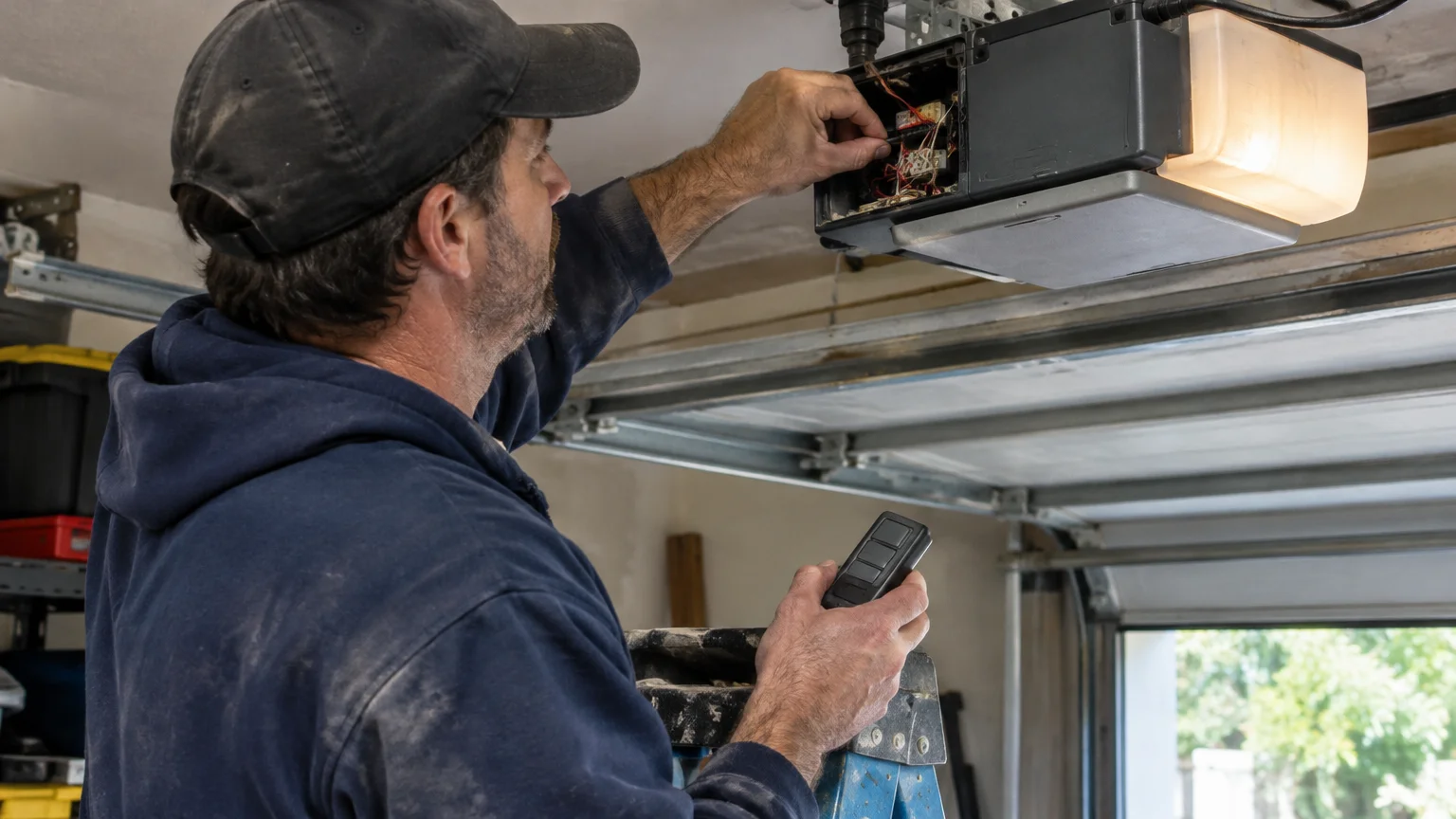
- What is a garage door opener universal remote?
- What can a universal remote replace?
- What can a universal remote not replace?
- How do you know if a universal remote is compatible?
- How do you program a universal garage door remote?
- What should you do when a universal remote does not work?
- When should you choose a universal remote or call a garage door professional?
- Key takeaways
- Frequently Asked Questions
- Conclusion
What is a garage door opener universal remote?
A garage door opener universal remote is a handheld control for selected opener brands and systems. It sends a wireless signal to the opener motor. When the signal matches, the opener can start the door.
The word universal does not mean the remote fits every opener. Each product supports certain brands, models, frequencies, or code types. The package and instructions should explain those limits before you buy.
How universal remotes differ from original equipment remotes
An original equipment remote comes from the opener maker. It is often made for one opener family. It may support special features made for that brand.
A universal remote is made for use with several brands. It can help when the old remote is lost or no longer sold. It may also cost less than a brand-specific remote, but the final cost depends on the product and any needed service. The final cost of professional work is confirmed on a quote.
Universal remotes may have fewer buttons. A wall control, light button, lock feature, or smart function may not work. The main open and close command is the feature most likely to work.
Which garage door systems universal remotes can control
Many universal remotes work with common home opener brands. Some control more than one door. Others control only one opener. Compatibility can also depend on the opener’s age and security system.
Older systems may use fixed code switches. Newer systems may use rolling codes. A rolling code changes after each accepted signal. The remote must support the same system before pairing can work.
Jamestown Garage Door Repair can help property owners check whether a replacement remote fits. The opener label matters more than the shape of the old remote.
What can a universal remote replace?
A universal remote can replace many handheld controls used to open and close a garage door. It may replace a lost remote, damaged remote, or extra remote for another driver. It may not replace every feature on the original control.
Check the opener brand and model before buying. The remote’s support list should also match the code type. A remote that looks the same may still use a different signal.
Replacing a lost, damaged, or extra handheld remote
A universal remote may be useful when the original remote is missing. It can also help when the case is cracked, the buttons are worn, or the remote works only nearby.
A weak battery is a common cause of poor range. Replacing the battery may solve the issue without buying another remote. Check the battery contacts for dirt, rust, or damage first.
If a remote was lost, remove it from the opener memory when possible. This helps keep another person from using it. The owner’s manual should explain how to erase old controls and pair the remotes that remain.
Using one remote for multiple garage doors
Some universal remotes can control more than one opener. Each button may pair with a different door. The remote must support the brand and code system used by every opener.
Test each door from a safe place. The door should move smoothly. It should also stop or reverse when the safety system finds an object. A remote cannot fix a door that binds, falls, or moves unevenly.
Labels can help when one remote controls several doors. This is useful for homes, workshops, rental spaces, and small businesses. Property owners should also remove controls that belonged to former workers or tenants.
What can a universal remote not replace?
A universal remote cannot replace the opener motor, wall control, photo-eye sensors, wiring, springs, cables, or other parts. It sends a command, but it does not lift the door.
This matters when a new remote does not work. The remote may not be the problem. A dead opener, blocked sensor, damaged circuit board, or broken garage door spring needs a different repair.
When a remote cannot overcome an incompatible opener
A universal remote cannot pair with an opener that uses an unsupported brand, frequency, or security system. Some older units have few replacement choices. Some newer units need a certain remote family or receiver.
The opener label and manual can provide useful clues. The remote package may list supported model numbers. If the details are unclear, a garage door professional can identify the opener before another device is bought.
A smart garage door opener adds another layer. It may use an app, wireless hub, or network connection. A handheld remote may open the door while leaving smart features unavailable.
Why universal remotes do not fix opener or door problems
A remote cannot fix a door that is off its tracks or a motor that only hums. It cannot repair broken lift cables or a damaged wall button. It also cannot make a door safe when springs or brackets are failing.
The same rule applies to panel damage. Questions about how to repair or replace a garage door panel concern the door itself. Panel work can affect balance, alignment, and safe movement.
If the opener runs but the door does not move, the issue may involve the trolley, drive system, or door connection. Garage Door Opener Repair can address opener faults, while Garage Door Off Track Repair addresses alignment problems. These are not remote programming issues.
How do you know if a universal remote is compatible?
Compatibility depends on the remote and the opener brand, model, code type, and programming method. The remote should list the opener family or model range. Guessing from the remote’s shape is not reliable.
The opener label is often on the motor housing. The old remote may also show a brand or model number. Photos of both items can help a professional find a better match.
Checking opener brands, models, frequencies, and programming methods
Start with the brand and model printed on the opener. Then compare that information with the universal remote instructions. Some products list many brands. Others list only certain model groups.
Frequency can matter, especially with older systems. Frequency is the radio signal used by the remote and opener to talk. A different frequency may not work, even when the brand name matches.
Programming methods also vary. Some openers learn a remote through a button on the motor unit. Others use code switches, a keypad pattern, or a separate receiver. The instructions should explain the correct method.
Understanding rolling codes, dip switches, and security systems
A rolling code system changes the accepted code after a successful command. This helps stop an old signal from being used again. The remote and opener must support the same rolling-code system.
Dip switches are small physical switches found on some older equipment. They set a fixed code. The remote and receiver need matching settings. The manual should guide this check because the switches can be easy to misread.
Modern security systems may use encrypted or brand-specific signals. A universal remote may support some systems but not others. If the opener has a smart hub or unusual receiver, professional help can prevent repeated failed attempts.
How do you program a universal garage door remote?
Programming a universal garage door remote usually means placing the opener and remote into learning mode. The remote then sends the right signal. The exact process changes by brand and model, so follow the product instructions.
Stay clear of the moving door. Keep children, pets, and vehicles away. Programming is not a reason to touch springs, cables, brackets, or other parts under tension.
Preparing the opener and remote before programming
Install the correct battery and remove any protective tab. Make sure the opener has power and that the wall control works. Clear clutter so the door can be watched from a safe place.
Keep the opener manual nearby. Record which remote button will control the door. This helps when one remote will operate more than one opener.
If the opener has no power, the wall control is dead, or the unit looks damaged, programming may not help. Garage Door Opener Repair may be needed before a new remote can be tested.
Common programming steps and signs of successful pairing
Most systems use a learn or program button on the opener. The remote is then placed into pairing mode, and a selected button is pressed as directed. Some systems need a short wait or another confirmation press.
The instructions may differ for fixed-code and rolling-code openers. Do not guess at button patterns when the manual is unclear. A wrong sequence may erase working remotes or change stored settings.
Successful pairing may make the opener light flash or the unit click. The door may also respond to the chosen button. Test it from a clear place. If it stops, reverses, or makes a harsh sound, the opener or door may have another fault.
What should you do when a universal remote does not work?
When a universal remote fails, begin with safe checks. Confirm the battery, model match, distance, and programming mode. If these checks fail, the opener or door may need inspection.
A remote problem can be simple. Repeated testing can also hide a larger fault. Stop if the door moves in an unsafe way.
Troubleshooting batteries, range, buttons, and memory
Replace the battery with the type shown in the instructions. Check its direction and clean contacts. A damaged button or cracked circuit board may stop the signal.
Test the remote near the opener while facing it. If it works only nearby, a weak battery, interference, or antenna issue may be involved. The remote may also be paired with another opener close by.
If the opener memory is full or the remote was paired incorrectly, the device may need to be erased and paired again. The manual should explain this process. Erasing memory can remove other working remotes, so approved controls may need to be paired again.
When to inspect the opener, sensors, wiring, or antenna
The opener needs attention when the wall button also fails, the motor is silent, or the light flashes without movement. Photo-eye sensors should face each other and stay clean. A blocked or misaligned sensor can stop the door from closing.
Loose wires, a damaged antenna, or a failed circuit board can affect remote signals. These parts should be checked by someone trained to work on openers. Do not open the motor housing casually.
A door that is heavy, crooked, noisy, or stuck needs more than a new remote. Garage Door Maintenance can help find wear early, while Garage Door Cable Repair may be needed when a cable is loose or damaged. Cable and spring work can release stored force and should not be attempted at home.
When should you choose a universal remote or call a garage door professional?
A universal remote makes sense when the opener works normally. It is useful when the problem is a lost, damaged, or extra handheld control. A professional is safer when the opener, door, sensors, wiring, or lifting parts show trouble.
The choice is easier when access control is kept separate from mechanical repair. A remote manages a signal. It does not make an unsafe door safe.
Situations where a universal remote is a practical solution
A universal remote may fit when:
- The opener responds normally to its wall control.
- The old remote is lost, cracked, or worn out.
- The opener brand and model appear on the support list.
- The owner needs another control for a household member.
- The remote will operate supported doors.
A homeowner can safely check batteries, labels, buttons, range, and basic cleanliness. These tasks do not require work on springs, cables, bottom brackets, or other parts under tension.
Jamestown Garage Door Repair helps owners sort out remote questions when the right device is unclear. In Jamestown and nearby communities, the goal is reliable access without overlooking a safety issue.
Safety concerns and repair issues that need professional help
Professional help is needed when a door falls, binds, sits crooked, or will not stay open. It is also needed when springs, lift cables, bottom brackets, or tracks look damaged. These parts can move with great force and cause serious harm.
A professional can check the full system and explain whether repair, replacement, or opener installation is right. Do not remove springs, adjust spring tension, handle lift cables, or move bottom brackets without proper training and tools.
For urgent access or security concerns, Garage Door Installation or Garage Door Opener Repair may be the right service path. The final cost depends on the part, opener type, access, damage, and urgency. It is confirmed on a quote before approved work.
Key takeaways
- A universal remote replaces many compatible handheld remotes, not every garage door control.
- Brand, model, frequency, code type, and programming method affect compatibility.
- A remote cannot repair a dead opener, broken spring, damaged cable, bad sensor, or off-track door.
- Homeowners can safely check batteries, labels, buttons, range, and basic cleanliness.
- Spring, cable, bracket, wiring, and mechanical door repairs need trained professional help.
Frequently Asked Questions
Can any universal remote work with any garage door opener?
No. A universal remote works only with supported brands, models, frequencies, and code systems. Universal means wider support, not full support. Check the opener label and remote instructions before buying. If the model is unclear, a garage door professional can help find a suitable replacement.
Will a universal remote work with an older opener?
It may, but older openers can use fixed codes, unusual frequencies, or receivers that are no longer sold. Some universal remotes support these systems. Others work only with newer rolling-code openers. The opener model and receiver type matter more than the remote’s appearance.
Can a universal remote fix a garage door that will not open?
No. A new remote cannot fix a broken spring, dead motor, failed sensor, damaged wire, or off-track door. First check whether the wall control works and whether the opener has power. If the door is heavy, crooked, or unsafe, stop testing and arrange a professional inspection.
How many garage doors can one universal remote control?
That depends on the remote model. Some have buttons for more than one opener. Others operate only one door. Each opener must be compatible. Test every button from a safe place and label them if the property has several doors.
Why does the remote work only from a short distance?
Short range can result from a weak battery, dirty contacts, a damaged button, radio interference, or an antenna issue. Replace the battery first and test near the opener. If the wall control also acts strangely, the opener may need inspection instead of another remote.
Conclusion
A garage door opener universal remote can restore access when the opener works and the replacement device is compatible. It cannot repair the door, motor, sensors, springs, cables, or wiring. Careful model checks and safe testing help property owners choose the right solution.
Jamestown Garage Door Repair can help property owners when a remote problem may point to a larger opener or door fault. Contact us today for urgent help choosing the next safe step.